Machine Learning Services and Solutions
Turn Business Data Into Decisions That Move You Forward
Your business generates data every day. The opportunity lies in using it to anticipate demand, recognize patterns, improve decisions, and respond to changing conditions faster.
Hyena provides machine learning services that help businesses turn raw data into practical intelligence. From custom ML model development and predictive analytics to enterprise machine learning solutions, we build systems around your business objectives, existing technology, and operational needs.
Why Machine Learning Development?
As a machine learning development company, Hyena works with businesses to identify valuable use cases, evaluate data readiness, develop tailored models, and integrate ML capabilities into existing applications and workflows.
Our approach connects the technical work with the business outcome. Every solution starts with a clear understanding of the problem, the available data, and how the resulting predictions or recommendations will be used.

Our Machine Learning Services For Enterprises
From early-stage model experimentation to enterprise deployment, our ML development services cover the key stages of building and applying machine learning to business problems.

Machine Learning Consulting
Not every business problem requires a machine learning model. Our machine learning consulting and development services help teams assess potential use cases, evaluate data readiness, define success metrics, and select suitable approaches before committing to development.
We can help shape an ML roadmap, prioritize opportunities, and establish a practical path from proof of concept to wider adoption.

Enterprise Machine Learning Solutions
Enterprise ML requires more than a model that performs well in a development environment. It must work with business data, integrate with existing systems, and meet operational requirements.
We help design custom enterprise machine learning solutions that account for data pipelines, application integration, scalability, monitoring, security, and the needs of the teams using them.

ML Model Development
Our machine learning model development services cover data preparation, feature engineering, algorithm selection, model training, evaluation, and refinement. We help translate business requirements into models designed to perform against defined objectives.
Depending on the problem, this may involve classification, regression, clustering, recommendation systems, or other suitable ML techniques.

Predictive Analytics Services
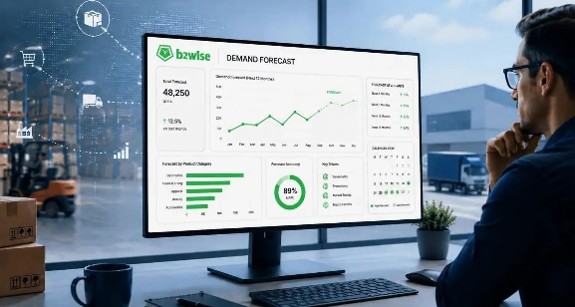
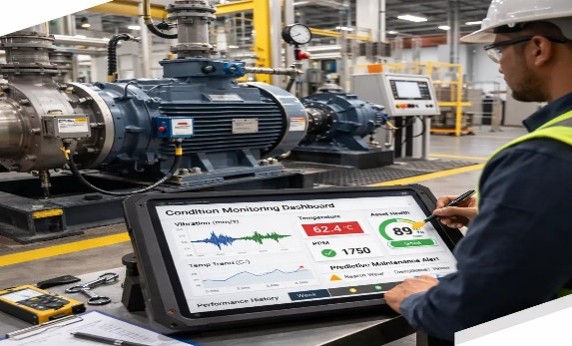
Move beyond retrospective reporting with models that estimate what may happen next. Our predictive analytics services use historical data and relevant signals to help businesses forecast demand, identify potential churn, anticipate maintenance needs, and assess emerging risks.
Predictions can then feed into planning tools, dashboards, or operational processes to support timely action.

ML-Powered Business Process Automation
Combine machine learning predictions with existing applications and business rules to improve workflows that require more than fixed, predefined logic.
Custom ML solutions for business automation can help prioritize cases, classify incoming information, flag exceptions, recommend next steps, and route work for human review where judgment is needed.

Model Evaluation, Deployment, and Monitoring
A model's performance can change as business conditions and incoming data evolve. We help evaluate model quality, integrate models into target environments, and establish monitoring approaches to track performance over time.
This supports more dependable ML adoption, with model updates and retraining guided by actual performance and business requirements.
ML-enabled Financial Services
To create outstanding fintech solutions for our clients, Hyena AI/ML experts build an intelligent solution that prevents fraud, predicts future profits, and boosts productivity.
Benefits of Enterprise Machine Learning Solutions for your business
The right machine learning use case depends on where your business faces uncertainty, repetitive analysis, or decisions that could benefit from better predictions.
Machine Learning Solutions for Your Industry
Machine learning applications vary by industry because the data, operating conditions, and decisions differ. Hyena develops industry-focused solutions around relevant business processes, data availability, and measurable objectives.
The Right ML Approach for the Problem
Different business challenges call for different techniques. Hyena can select suitable methods based on the use case, available data, performance requirements, and operational environment.
-
Supervised learning
Train models using labeled examples to predict outcomes, classify records, estimate values, or flag potential risks.
-
Unsupervised learning
Explore unlabeled data to identify clusters, discover relationships, and detect unusual patterns that warrant further investigation.
-
Deep learning and neural networks
Apply multilayer neural networks to complex patterns in suitable image, text, audio, or other high-dimensional data.
-
Natural language processing
Analyze and classify text, extract information from documents, and identify patterns in language-based business data.
-
Recommendation systems
Use behavioral patterns, item attributes, and relevant context to recommend products, content, or next-best actions.
-
Time-series forecasting and anomaly detection
Analyze data over time to estimate future values and identify deviations from expected behavior.
These techniques can be combined where appropriate. The choice should follow the business problem and the evidence from model evaluation, not the novelty of a particular algorithm.
How We Deliver: From the First Use Case to Real-World Deployment
A successful ML initiative needs a clear business objective, suitable data, a reliable model, and a plan for using its outputs. Our machine learning development process connects these elements at every stage.
-
01. Use-case discovery and consulting
We identify the business problem, understand the decisions the model needs to support, and define success metrics. We also evaluate whether ML is the right approach for the use case.
-

02. Data assessment and preparation
We examine available data for relevance, quality, completeness, and potential bias. Data is prepared for modeling through appropriate cleaning, transformation, and feature engineering.
-

03. Model development and experimentation
We select suitable algorithms, establish baselines, train models, and compare alternative approaches. The goal is to identify a model that performs against the business requirements and relevant technical constraints.
-

04. Validation and testing
We evaluate model performance on appropriate test data and examine errors, robustness, and other requirements relevant to the use case. Where needed, validation includes fairness, explainability, and domain-specific checks.
-

05. Integration and deployment
We integrate model outputs into the required applications, APIs, data pipelines, or business workflows. Deployment planning considers performance, security, infrastructure, and how users will act on model results.
-
06. Monitoring and continuous improvement
We establish appropriate monitoring to track model performance and identify changes in incoming data or real-world conditions. Retraining and refinement can then be planned when performance or business needs require them.
Projects We've Delivered
We would love to add yours next. A look at how our AI agent development and integration work plays out inside real operations.
Our Clientele
Hyena has earned a reputation and respect from its client by delivering top-notch customized IT solutions. We have satisfied clients from all over the globe.


Trusted by teams running AI in production
Hyena optimized the capability of our m-learning applications and helped us reach 40% increased student subscriptions, succeeding beyond our targeted boundaries with Hyena's AI solutions.
Why choose Hyena as your machine learning development company?
Choosing a machine learning partner means looking beyond the initial model. You need a team that understands the problem, works with your existing technology, and considers how the solution will be used after deployment.
- Business-first solution design: We connect machine learning use cases to operational needs and measurable business objectives.
- Custom development: Our approach accounts for your data, workflows, technical environment, and model requirements instead of assuming a one-size-fits-all solution.
- End-to-end development support: From consulting and data preparation to model evaluation, integration, and monitoring, we consider the full ML lifecycle.
- Flawless integrations: We design solutions with the target business systems, APIs, data pipelines, and deployment environment in mind.
- Industry-aware applications: We consider industry-specific processes, constraints, and validation needs when shaping machine learning solutions.
- A practical path to adoption: We help teams evaluate use cases, establish success criteria, and plan how model outputs will support real business decisions.
The objective is to build machine learning capabilities that fit your business environment and can be evaluated against clearly defined outcomes.
Have a Business Problem That Could Benefit From Machine Learning?
You don’t need to begin with a fully defined ML architecture. Start with the challenge you’re trying to solve, the data you have available, and the outcome you want to achieve.
Hyena can help you evaluate the opportunity, identify an appropriate machine learning approach, and plan the next steps toward implementation.
Let’s explore what machine learning can do for your business.
FAQs
What are machine learning services?
Machine learning services help businesses use data to identify patterns, make predictions, classify information, and improve decisions. They include ML consulting, model development, predictive analytics, deployment, and monitoring.
What does a machine learning development company do?
A machine learning development company builds, tests, and deploys ML models tailored to business needs, from data preparation and model training to system integration and performance monitoring.
What is the difference between machine learning consulting and ML development services?
Machine learning consulting identifies suitable use cases, assesses data readiness, and defines an ML strategy. ML development services cover model building, testing, integration, and deployment.
What are custom machine learning solutions?
Custom machine learning solutions use an organization’s data and business requirements to build tailored models for applications such as demand forecasting, fraud detection, and customer retention.
What are predictive analytics and machine learning services?
These services use historical data and machine learning models to forecast outcomes, identify risks, and support decisions involving sales, inventory, customer behavior, and maintenance.
What are enterprise machine learning solutions?
Enterprise machine learning solutions integrate ML models into business systems and workflows, with consideration for scalability, security, monitoring, and operational requirements.
How does machine learning help automate business processes?
Machine learning automates data-driven tasks by classifying information, predicting outcomes, detecting anomalies, and recommending actions within business workflows.
Which industries can benefit from machine learning development services?
Healthcare, banking and finance, retail, manufacturing, and logistics can use machine learning for forecasting, fraud detection, predictive maintenance, customer analytics, and operational optimization.
How much do machine learning development services cost?
Costs depend on data readiness, model complexity, integration requirements, infrastructure, and maintenance. A project assessment helps establish the scope and budget.
How long does it take to develop a machine learning model?
A focused proof of concept may take weeks, while a production-ready enterprise solution may require several months, depending on data quality, complexity, testing, and integration.
Can machine learning solutions integrate with existing business systems?
Yes. ML models can connect to existing applications, databases, APIs, and workflows, allowing businesses to incorporate predictions and insights into their operations.
How do you measure the success of a machine learning solution?
Success is measured through model-performance metrics and business outcomes, such as prediction accuracy, reduced manual effort, lower processing costs, and improved operational efficiency.