The Emergence and Implications of Generative AI
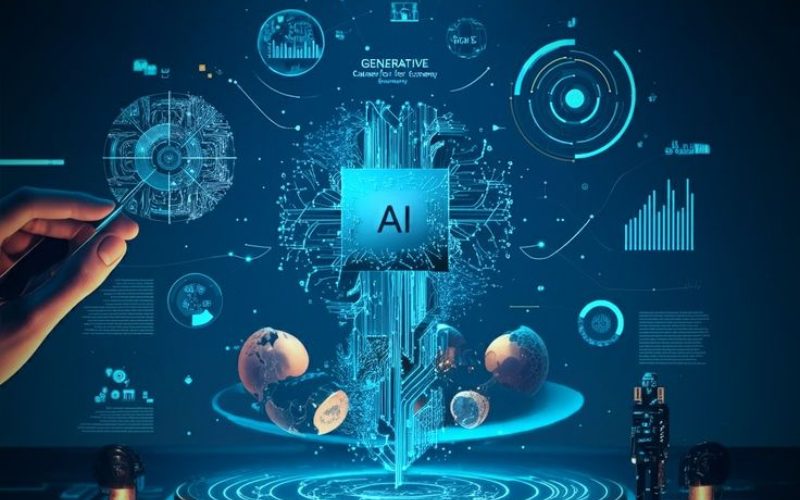
The Emergence and Implications of Generative AI
Generative AI for IT: Integration Approaches, Top Use Cases, Challenges, and Future Outlook
Generative AI (Gen AI) is no longer a futuristic idea; it is already part of our everyday lives. From creating text and images to improving customer service and automating tasks, it is transforming how businesses operate. Rather than being the next big thing, Gen AI is here now, reshaping the world of IT and becoming a new pillar alongside AI and Data. As organizations adopt this powerful technology, they must also prepare for the challenges and changes it brings to the future of information technology.
The Emergence of Generative AI in the IT
Generative AI refers to advanced AI systems capable of creating new content, text, code, images, configurations, and insights based on large datasets. These systems include:
- Large Language Models (LLMs)
- Code generation models
- Multimodal AI systems
But in IT, Generative AI goes far beyond chatbots. It now powers:
- Automated code writing and review
- Infrastructure provisioning
- Intelligent incident resolution
- Cybersecurity defense automation
- IT Service Management (ITSM) optimization
Its real power lies in contextual understanding, analyzing multiple data sources, and generating actionable outcomes with human oversight.
The Most Common Integration Approaches for Generative AI in IT
Successful adoption requires strategic architecture, not plug-and-play deployment. Leading organizations are using four primary integration models.
- API-Based Integration
Cloud and AI providers offer APIs that enable rapid experimentation and scaling. Use cases include:
- Code snippet generation
- Log and ticket summarization
- Technical Q&A automation
- Documentation generation
This approach accelerates innovation but requires careful management of data privacy, latency, and vendor lock-in risks.
- Embedded AI in IT Platforms
This strategy enhances existing tools without requiring a full system redesign. Many DevOps, IT operations, and monitoring platforms now embed generative AI directly into workflows:
- AI-assisted incident triage
- Automated root cause analysis
- Intelligent change management recommendations
- Custom Models & Private Deployments
For organizations with strict compliance and data sovereignty requirements, private AI deployments are gaining momentum. These models are trained on internal assets such as:
- System logs
- Knowledge bases
- Code repositories
- Configuration files
While this approach demands higher upfront investment, it delivers superior contextual accuracy and control.
- Hybrid AI Architectures
A hybrid approach combines public AI services for low-risk tasks and private AI models for sensitive workloads. This balances innovation speed with enterprise-grade security and compliance.
High-Impact Use Cases of Generative AI in IT
-
Software Development & DevOps Automation
Generative AI is accelerating the entire SDLC (Software Development Life Cycle):
- Intelligent code generation and autocomplete
- Automated code review and vulnerability detection
- AI-driven unit and regression test creation
- CI/CD pipeline suggestions and optimization
It ensures faster releases, higher-quality code, and reduced developer burnout.
-
IT Operations & AIOps
Generative AI enhances AIOps with advanced pattern recognition and automation:
- Large-scale log analysis
- Automated incident classification
- Guided resolution steps
- Predictive failure detection
It provides organizations reduced Mean Time to Repair (MTTR) and improved system reliability.
-
IT Service Management (ITSM)
Modern ITSM becomes proactive and user-centric:
- AI virtual agents for password resets and queries
- Automated knowledge base creation
- Ticket summarization for faster handling
With Gen AI integration into ITSM systems or applications, businesses can experience higher first-contact resolution rates and improved user satisfaction.
-
Cybersecurity & Risk Management
With cyber threats increasing in sophistication, Generative AI strengthens defensive capabilities:
- Automated threat intelligence reporting
- AI-driven response playbooks
- Vulnerability analysis
- Phishing detection simulations
While attackers may leverage AI, enterprises using AI-driven defense gain a critical advantage.
-
Cloud & Infrastructure Management
By integrating Generative AI into enterprise cloud and infrastructure management applications, the IT teams can gain agility without sacrificing performance or compliance. Generative AI simplifies hybrid and multi-cloud environments through:
- Infrastructure-as-Code template generation
- Capacity forecasting
- Cloud cost optimization recommendations
Key Challenges in Adopting Generative AI
Despite its transformative potential, implementing Generative AI in IT comes with several critical challenges that organizations must address strategically.
-
Data Privacy & Security
Generative AI systems require access to large volumes of operational and sometimes sensitive business data. This creates risks such as data leakage through third-party APIs or exposure of proprietary information during model training. Without strong governance frameworks, encryption protocols, and strict access controls, organizations may face serious compliance and security issues. Protecting data must be a top priority in any AI adoption strategy.
-
Accuracy & Reliability
AI-generated outputs are not always perfect. Models can produce incorrect responses or hallucinations, which in IT environments may result in faulty configurations or improper incident resolutions. Relying entirely on AI without validation can increase operational risk. A human-in-the-loop approach is essential to review, verify, and refine AI-generated outputs.
-
Integration Complexity
Many enterprises operate on legacy systems, fragmented toolchains, and inconsistent data standards. Integrating Generative AI into such environments can be technically complex and resource-intensive. Successful implementation requires strong architectural planning, standardized data practices, and seamless system integration strategies.
-
Skills & Change Management
Adopting Generative AI requires more than technology upgrades; it demands workforce transformation. IT teams must upskill to effectively use AI tools, redefine roles to align with automation, and overcome resistance to change. Without proper training and change management strategies, AI initiatives may fail to deliver expected results.
-
Ethics, Compliance & Governance
AI-driven decisions can have regulatory, ethical, and operational implications. Organizations must ensure transparency, explainability, and auditability in their AI systems. Compliance with evolving regulations and responsible AI practices is no longer optional, it is a strategic necessity for sustainable AI adoption.
How Generative AI Adoption in IT Delivers ROI?
Organizations that pilot use cases, define KPIs, and continuously measure impact build a compelling ROI narrative. Measuring ROI requires both quantitative and strategic metrics.
Cost Reduction
- Reduced manual operational workload
- Lower incident resolution costs
- Minimized downtime
- Smarter infrastructure investments
Productivity Gains
- Faster development cycles
- Increased ticket resolution per agent
- Improved MTTR and MTBF
Quality & Risk Improvement
- Fewer code defects
- Stronger security posture
- Higher system availability
Strategic & Intangible Benefits
- Enhanced employee experience
- Accelerated innovation cycles
- Data-driven decision-making
The Future of IT: Autonomous, Intelligent, and Self-Optimizing
The next frontier is Autonomous IT Operations, often described as self-driving IT. Future systems will detect anomalies automatically, diagnose root causes, and apply corrective actions autonomously. Human roles will shift from operational firefighting to governance, innovation, and strategic oversight.
- Deeper Human-AI Collaboration
Generative AI will not replace IT professionals; it will augment them. Engineers will operate as AI-empowered architects, leveraging intelligent copilots to design, secure, and scale systems faster than ever.
- Domain-Specific Enterprise AI
Future enterprises will deploy custom AI models trained on their unique data ecosystems, enabling unmatched contextual accuracy and competitive differentiation.
- Stronger AI Governance Standards
As AI adoption grows, so will regulatory frameworks and governance standards focused on security, fairness, explainability, and compliance.
So, organizations that strategically integrate Generative AI into IT will lead in speed to innovation, service reliability, operational efficiency, and digital resilience. Those that delay risk technological stagnation.
Conclusion
Generative AI is not simply enhancing IT; it is redefining it. IT is rapidly evolving from traditional infrastructure management to intelligent, autonomous orchestration. Organizations that embrace this shift are not just improving efficiency; they are transforming how innovation happens.
For forward-thinking enterprises, Hyena.ai represents a defining opportunity to build smarter systems, empower high-performing teams, and unlock faster, data-driven business decisions. Generative AI is no longer a future possibility; it is a present-day competitive advantage.
This is more than the next phase of IT evolution. It is a technological revolution reshaping enterprise intelligence at its core.
Ready to Lead the Generative AI-Driven Future?
Don’t just adapt to change; drive it. Partner with Hyena.ai to architect intelligent IT ecosystems that scale, secure, and self-optimize.
Let’s build the future of IT, together.