How AI Agents for Cybersecurity Are Reshaping Enterprise Defense Strategies?
How AI Agents for Cybersecurity Are Reshaping Enterprise Defense Strategies?
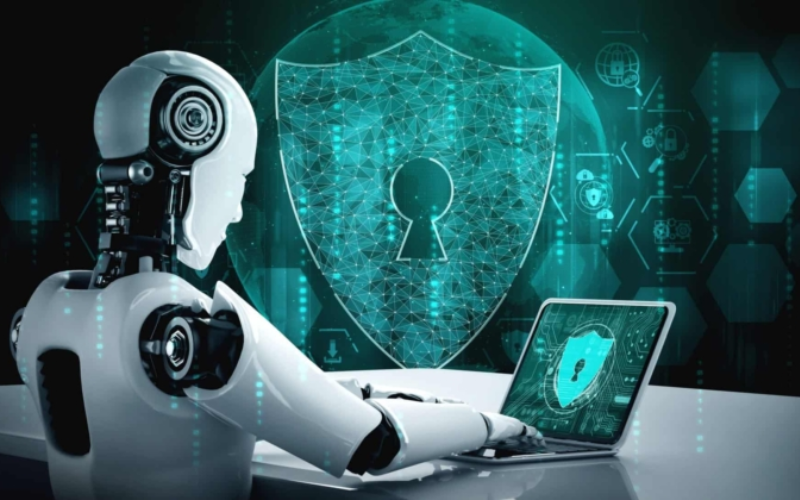
The AI playbook is being rewritten in the high-stakes game of business cyber. Back-door firewalls and signature detection methods are outdated. The hackers are smarter, quicker, and more automated, and fortunately, the defenders are catching up efficiently. Welcome to the age of AI agents: autonomous, networked computer programs no longer just reporting but reasoning, acting, and learning.
In this post, we will delve into how these AI agents are transforming the landscape for enterprises, the advantages they offer, as well as the potential risks and considerations for organizations.
What Are AI Agents in the Cybersecurity Landscape?
First, what are “AI agents“? In cybersecurity, there are solutions, typically large-language model, machine learning, and decision-logic-based, that can sense, decide, and act on something autonomously. The agents are capable of watching network traffic, scanning for anomalies, filtering alarms, orchestrating responses, or even carrying out an attack to probe defenses.
These agents collaborate, evolve with every attack they encounter, and make split-second decisions to protect data, infrastructure, and business continuity. AI agents represent not just the future of cyber defense but a competitive edge for reducing risk, accelerating response, cutting operational cost, and building a security posture worthy of tomorrow’s digital economy.
Why Enterprises Need a New AI Approach to Defense?
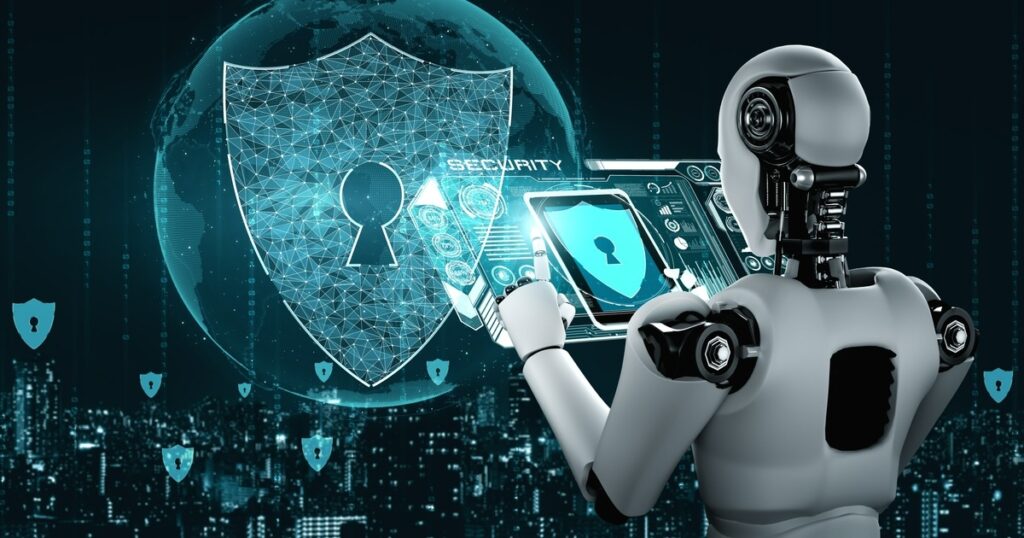
Cyber threats now evolve faster than human analysts and legacy tools can react. Attackers are using AI to scale attacks, bypass controls, and exploit systems in seconds, not hours or days. Traditional models built on static rules and manual triage simply can’t keep pace.
Enter AI-driven autonomous security agents, systems that detect anomalies, investigate threats, and execute responses instantly. They don’t just alert, they act. They learn continuously, reduce analyst workload, and cut dwell time from days to real-time action.
For leadership teams, this isn’t innovation, it’s insurance. AI-first defense is now fundamental to business resilience, competitive readiness, and operational continuity in a world where digital risk equals enterprise risk. Organizations that move now will lead. Those who don’t will be reacting to someone else’s breach headline.
Key Capabilities of AI Agents in Cybersecurity
What exactly can these AI agents bring? Here are some of the core capabilities:
- Real-Time Threat Detection & Anomaly Identification
They monitor for logs, network traffic anomalies, user behavior, application events, and mark anomalies from normal in real-time. They can detect fine-grained anomalies (e.g., out-of-order logon, exfiltration data patterns) rules cannot.
- Automated Incident Response & Containment
Once a threat is detected, AI agents automatically execute response playbooks by quarantining endpoints, blocking malicious IPs, isolating files, revoking permissions, and halting lateral movement, all within seconds, not hours.
- Vulnerability Management & Prioritization
AI agents can autonomously triage vulnerabilities, evaluate exploitability, prioritize remediation actions, and map attack paths to ensure the most critical weaknesses are addressed first.
- Proactive Threat Hunting & Predictive Analytics
With the analysis of historical data, attacker threat feeds, and attack patterns, AI agents can forecast potential attack vectors, anticipate adversary actions, and respond in advance to re-tune defenses.
- Human-Agent Collaboration & Efficiency Gains
Rather than substituting human analysts, the optimum use of AI agents would be as augmentations to eliminate noise, advance the relevant, liberate human time for higher-value tasks, and enable faster decision-making.
- Cross-Domain Coordination
In the business model, an agentic construct can combine endpoints and networks and clouds and applications and third parties and context and coordinate rather than point solutions.
Top Use Cases of AI Agents in Enterprise Cybersecurity
- Sophisticated Phishing & Social Engineering Defense
AI-generated phishing is polished, targeted, and context-aware. AI agents analyze content, sender behavior, and user context to detect subtle anomalies and block malicious messages before users engage.
- Automated Red-Teaming & Attack Surface Simulation
Agents continuously simulate real attacker behavior, scanning, probing, and testing credential paths and lateral-movement routes, to identify and fix weaknesses before adversaries exploit them.
- Alert Triage & Workflow Automation
AI agents correlate events, filter noise, and prioritize critical alerts to avoid analyst fatigue and dramatically reduce detection and response times.
- Cloud & Third-Party Risk Remediation
They scan evolving cloud configs and vendor integrations for misconfigurations and insecure access paths, automatically remediating or escalating issues.
- Regulatory & Compliance Automation
AI agents track policy drift, log compliance events, and flag deviations against frameworks like GDPR and NIST, ensuring continuous audit readiness.
AI Agents Implementation Best Practices
How do you actually implement these artificial intelligence (AI) agents in an enterprise environment? Here are some practical steps you could take:
- Identify a clear use case, such as alert triage, phishing detection, or a cloud misconfiguration AI agent.
- Map your assets and risks: Understand what to protect, what the attack surface is, and where AI agents can make the biggest impact.
- Define manual flows: Even though the agent acts autonomously, design how humans take over, how overrides happen, and how logs/audits are preserved.
- Ensure data quality: Well-structured input data, context, clean logs, and telemetry all play a significant role in ensuring the optimal performance of the AI agent.
- Integrate with workflows: Never build in isolation. The AI agents need to integrate with SIEMs, alerting, ticketing, and incident management systems.
- Monitor and measure: Monitor KPIs and the number of true positives versus false positives to improve the efficiency and analyze the cost of incidents.
- Establish governance: Establish clear policies for agent permissions, scope of actions, audit trails, transparency, and escalation protocols.
- Train your team: Human analysts need to comprehend how the agent works, interpret its outputs, and know where to intervene.
- Scale gradually: When successful in pilots, widen the scope to grow functionality involving multiple agents, coordination among them, and building multi-agent orchestration.
Enterprises that follow such best practices are more likely to score on implementation rather than just deploying technology and hoping it will work.
The Future of AI Agents in Cybersecurity: Trends & What to Expect
What is the future of AI agents in enterprise cybersecurity?
Enterprise defense is shifting toward autonomous security, where AI agents detect, decide, and respond in real time with minimal human intervention. By 2030, these systems will run end-to-end security workflows, dramatically reducing risk exposure and analyst burden.
Instead of one central system, organizations will adopt multi-agent security ecosystems with specialized agents for reconnaissance, vulnerability triage, identity protection, and rapid containment, working together and with human analysts.
Cybersecurity will become an AI-vs-AI landscape, as attackers also deploy automated agents for phishing, reconnaissance, and malware generation. Defensive systems must stay ahead with predictive, adaptive intelligence.
With this shift, trust, explainability, and governance will be essential. Regulation will require accountable AI behavior and transparent decision paths in security operations.
Defense will extend beyond the enterprise network into cloud, IoT, and supply-chain ecosystems, providing continuous protection across interconnected environments.
The result: AI agents evolve from “security support” to a core business resilience engine, enabling secure growth, operational continuity, and competitive differentiation.
Conclusion
AI agents are already reshaping enterprise cybersecurity, delivering machine-speed detection, automated response, and adaptive defense. They shift security from reactive to proactive, driving faster mitigation, reduced risk, and stronger resilience.
Hyena, the best AI development company, helps enterprises build and deploy advanced AI-driven security solutions and autonomous defense agents. With deep expertise in AI engineering and enterprise-grade security design, we enable organizations to modernize defenses and stay ahead of evolving threats.